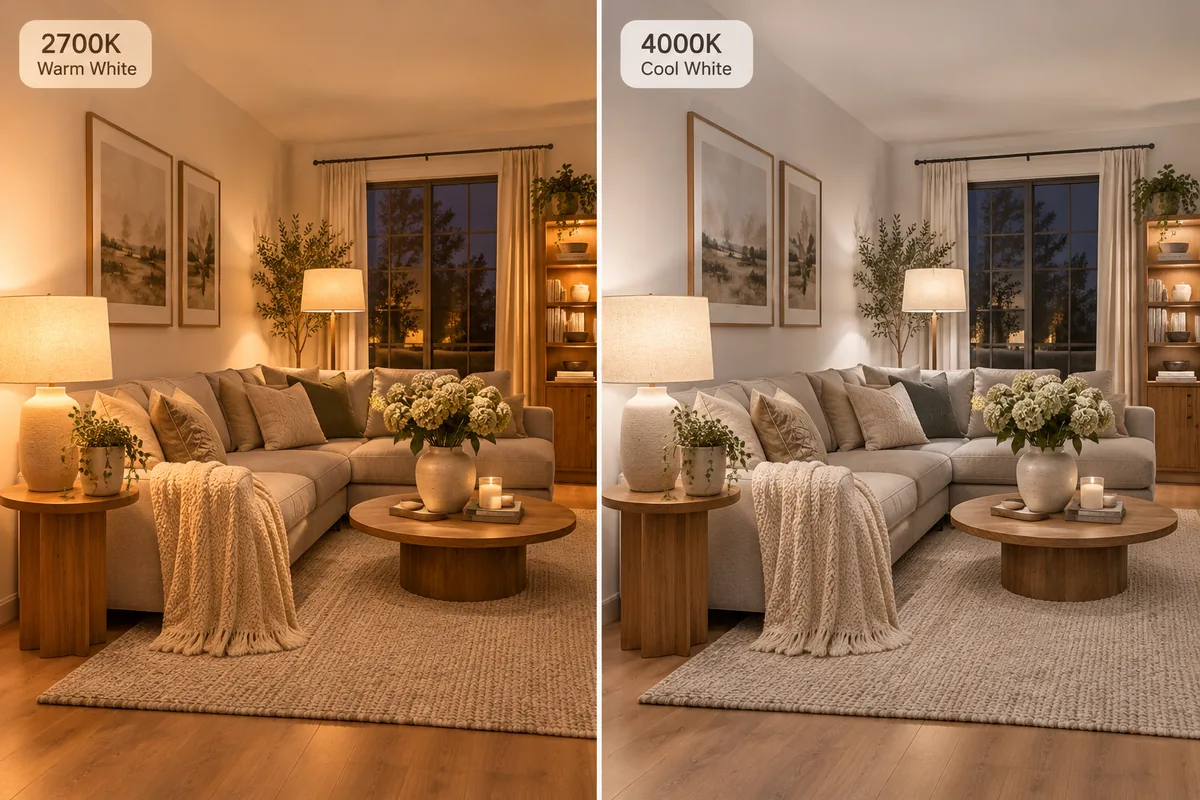
Light Bulb Color Temperature for Every Room (2700K vs 3000K vs 4000K)
For most homes, use warm white bulbs (2700K–3000K) in living rooms, bedrooms and dining rooms, and neutral white (3500K–4000K) in kitchens, bathrooms, laundry rooms and home offices, where you need to see clearly. Daylight bulbs (5000K and above) are best kept for garages, workshops and task lights.
The number with a “K” on the box is the bulb’s color temperature, measured in kelvins. Lower numbers look warm and yellowish; higher numbers look crisp, white or bluish.
What does color temperature mean?
Color temperature describes how warm or cool a bulb’s light looks. ENERGY STAR groups bulbs roughly like this:
| Kelvin range | Appearance | What it feels like |
|---|---|---|
| 2200K–3000K | Warm, yellowish | Cozy and relaxed, like incandescent bulbs |
| 3500K–4100K | Neutral white | Crisp, clean and bright |
| 5000K–6500K | Cool, bluish white | Sharp and energizing, like midday daylight |
Source: ENERGY STAR, Color and Mood. ENERGY STAR notes that most of its certified bulbs are made in the warm range.
Labels on boxes vary by brand. “Soft white” and “warm white” usually mean about 2700K–3000K. “Bright white” or “cool white” usually means about 3500K–4100K. “Daylight” usually means 5000K or higher. Always check the actual number.
Best color temperature for each room
These are recommendations based on how each room is used. They are not rules, so adjust them to your taste and how much daylight the room gets.
| Room | Recommended | Why |
|---|---|---|
| Living room | 2700K–3000K | Relaxing; flatters skin tones and wood |
| Bedroom | 2700K | Warmest light for winding down |
| Dining room | 2700K–3000K | Makes food and people look warm |
| Kitchen (ceiling and under-cabinet) | 3000K–4000K | Clear light for cooking and cleaning |
| Bathroom vanity | 3000K–3500K | Accurate enough for grooming, still flattering |
| Home office | 3500K–4000K | Helps you stay alert while working |
| Laundry room | 3500K–4000K | Shows stains and colors clearly |
| Garage and workshop | 4000K–5000K | Maximum clarity for tasks |
| Outdoor porch | 2700K–3000K | Welcoming and less harsh at night |
Should all the bulbs in a room match?
Yes, within one room. Mixing 2700K and 5000K bulbs in the same space makes one corner look yellow and the other blue. It is fine for different rooms to use different temperatures, as long as rooms that open onto each other stay close (for example 2700K in the living room and 3000K in the kitchen next to it).
Tip: Buy one bulb first, test it in the room at night, then buy the rest. The same “warm white” can look different between brands.
How bright should bulbs be? Lumens, not watts
Color temperature tells you the color of the light. Brightness is measured in lumens. ENERGY STAR advises looking at lumens rather than watts, because LEDs use far fewer watts for the same light. As a guide to replacing old incandescent bulbs:
| Old incandescent | LED brightness to look for |
|---|---|
| 40 watts | 450 lumens |
| 60 watts | 800 lumens |
| 75 watts | 1,100 lumens |
| 100 watts | 1,600 lumens |
Source: ENERGY STAR Light Bulb Purchasing Guide.
What is CRI, and does it matter?
CRI (color rendering index) measures how accurately a light shows colors compared with natural light, on a scale up to 100. A higher CRI makes paint colors, food and skin look more natural. For kitchens, bathrooms and anywhere you choose paint or clothes, look for bulbs with a CRI of 90 or higher on the box.
Can smart bulbs change color temperature?
Yes. “Tunable white” smart bulbs let you change the temperature, for example from 4000K during the day to 2700K in the evening. They are an easy way to use one bulb in a room you use for different things. Our smart home setup guide for beginners explains how to start, and you can set lights to change on a schedule.
How light color changes a room’s style
Warm light makes wood, linen and earthy colors glow, which suits styles like Japandi. Slightly cooler warm white keeps white walls looking fresh, which suits Scandinavian rooms. Our comparison of Japandi vs Scandinavian design covers both styles.
The bottom line
Use 2700K–3000K where you relax and 3500K–4000K where you work, keep one temperature per room, and judge brightness by lumens. Test one bulb at night before you buy a full set. In a long or open room, add a lamp per zone, as in our long narrow living room layouts.
Frequently asked questions
Is 3000K or 4000K better for a kitchen?
Both work. 3000K feels warmer and blends with nearby living areas; 4000K gives crisper task light. Many people use 3000K overhead and 4000K under the cabinets, though matching them looks more seamless.
Is daylight (5000K) bad for a living room?
It is not harmful, but it often feels harsh and clinical at night. Most people find 2700K–3000K more comfortable in living spaces.
What color light is best for sleep?
Warm light around 2700K or lower in the evening is the usual recommendation, and dimming lights before bed helps too.
Does color temperature affect paint colors?
Yes. Warm bulbs make colors look more yellow; cool bulbs make them look bluer. Test paint samples under the bulbs you will actually use.
Find more design guides in our Interior Design section.